Acne Scars: The Main Types and How Dermatologists Tell Them Apart
Acne scars are permanent changes in skin texture left after inflamed breakouts heal. Most are depressed (atrophic) scars, which come in three main shapes: icepick, boxcar and rolling. Fewer are raised (hypertrophic or keloid). Knowing which type you have matters, because each responds to different treatments.
Scars are not the same as marks
Flat brown or red marks after acne are discolouration, not scarring, and they usually fade with time and sun protection. A true scar changes the surface: you can see a dip, edge or bump when light hits the skin from the side. This guide is about those textural scars.
The five main types
| Type | Appearance | Typical location | Often treated with |
|---|---|---|---|
| Icepick | Narrow, deep, pinpoint holes | Cheeks | Focal TCA (CROSS), punch excision |
| Boxcar | Round or oval dips with sharp edges | Cheeks, temples | Lasers, microneedling, punch techniques |
| Rolling | Wide, shallow waves with soft edges | Cheeks, jaw | Subcision, microneedling, fillers |
| Hypertrophic | Raised, firm, within the original wound | Jaw, chest, back | Steroid injections, silicone, lasers |
| Keloid | Raised, grows beyond the original spot | Chest, shoulders, jawline | Specialist medical treatment |
Most people have a mix, which is why treatment plans usually combine methods.
Why some people scar and others do not
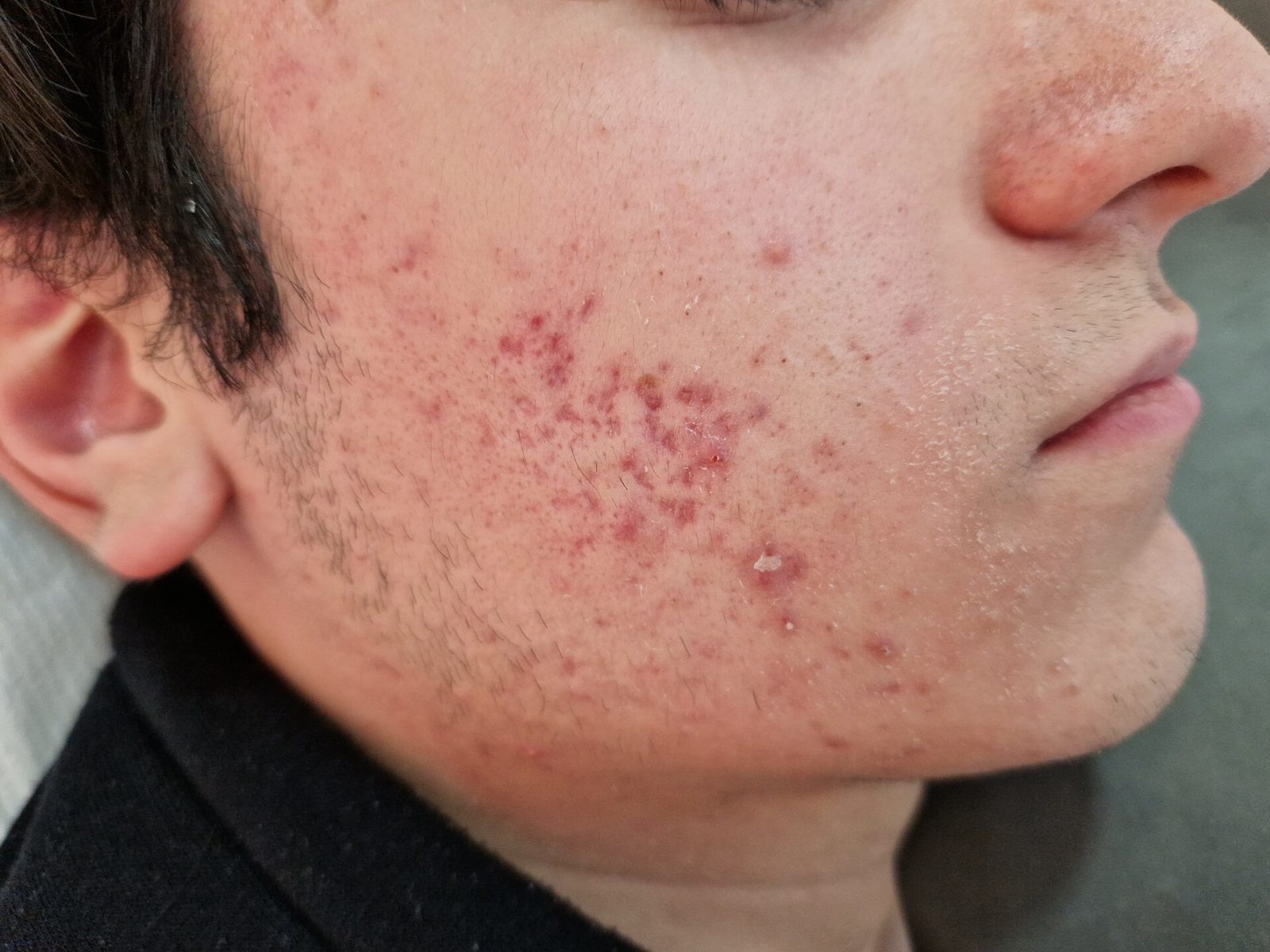
Scarring is linked mainly to how deep and inflamed breakouts are, and for how long. Nodules and cysts, which sit deep in the skin, are the biggest risk. Other factors include genetics, delay in effective treatment, and picking or squeezing spots. Darker skin tones are more prone to keloids and to long-lasting pigmentation around scars.
Prevention is the best scar treatment
If you still have active inflammatory acne, getting it under control with a doctor is the most effective step you can take against new scars. Our acne types chart helps you identify which breakouts carry the highest risk.
How a dermatologist assesses scars
A consultation usually involves looking at the skin under different lighting, sometimes stretching the skin (rolling scars soften when stretched; boxcar and icepick do not), and taking photos to track progress. The doctor will also consider your skin tone, as some lasers and peels carry a higher risk of pigment changes in medium and deeper skin.
In the UAE, choose a dermatologist licensed by the DHA in Dubai, the DOH in Abu Dhabi or MOHAP in the northern emirates.
Living with scars in a sunny climate
Sun does not create scars, but it makes them look worse by darkening the surrounding skin and highlighting texture through contrast. A broad-spectrum sunscreen every morning, reapplied outdoors, plus shade and a hat during the midday heat, helps the skin look more even while you plan treatment.
Makeup that helps
Silicone-based primers can temporarily blur shallow scars. Matte finishes reflect less light into dips than shimmer. Clean brushes daily to avoid new breakouts.
What not to do
- Do not pick or squeeze active spots; this pushes inflammation deeper.
- Do not try needling or acid treatments at home at medical strengths.
- Do not buy injections or “scar remover” procedures from unlicensed providers or home-visit services.
- Be wary of any product claiming to erase deep scars.
See a doctor promptly if
A raised scar keeps growing, becomes painful or itchy, or you have painful deep nodules or cysts. Also see a doctor if a mark changes shape or colour unevenly, as not every spot is an acne scar.
Identify the scar type first. The type, not the product, decides what can work.
Frequently asked questions
Can acne scars be removed completely?
Most treatments improve scars significantly rather than removing them entirely. Realistic goals are softer edges, shallower dips and more even skin.
Which acne scars are hardest to treat?
Deep icepick scars and keloids are often the most challenging and may need targeted procedures.
Do acne scars get worse with age?
They can look more noticeable as the skin naturally loses collagen and volume over the years.
Can I treat scars if I am on isotretinoin?
Some procedures are usually postponed during and after isotretinoin. Ask your dermatologist about safe timing.
Sources: American Academy of Dermatology, DermNet, British Association of Dermatologists
Last reviewed: 2026-11-25. General information only, not medical advice. Please consult a licensed practitioner in the UAE about your own situation.

Clear Skin Notes Editorial Team
The Clear Skin Notes editorial team researches and writes our guides and updates them when facts change.

You May Also Like
Acne Scar Treatment Options Compared: Lasers, Needling, Peels and More

How to Prevent Acne Scars Before They Form